The bodies and minds of children are in a constant developmental state and need a constant supply of nutrients to aid their growth. Although the macronutrients such as protein, carbohydrates, and fats are known to be the most important, the micronutrients are equally important in the background. 

Many parents often ask, “What benefits does vitamin B have?” and the answer lies in how these nutrients support everything from metabolism to cognition. Among severely malnourished children with B12 deficiency, up to 93% showed gross-motor development delay.

The key to all this vitality is the role of the B vitamins that act as the energy providers and cognitive facilitators of the body. These are water-soluble vitamins that assist in the conversion of food to fuel and maintain the brain and nervous system running efficiently. Understanding the benefits of B vitamins in the body can help parents make informed nutritional choices.

Health Benefits of B Complex Vitamins

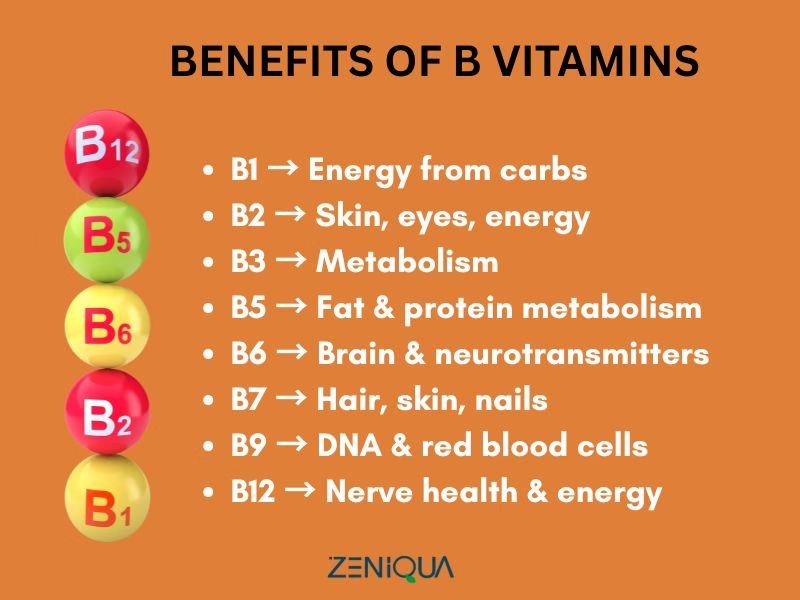
The B-vitamin group is made up of eight related nutrients, including B1 (Thiamine), B2 (Riboflavin), B3 (Niacin), B5 (Pantothenic Acid), B6 (Pyridoxine), B7 (Biotin), B9 (Folate), and B12 (Cobalamin), each having a distinct role in energy, brain activity, and immunity. 

Most parents prefer B complex supplements for children since they have all these advantages in one. The role of B vitamins is to assist the body in providing energy and also maintaining healthy nerve and brain cells. 

Proper metabolism, red blood cell formation, DNA synthesis, and general growth among children are guaranteed by adequate intake of a variety of foods. 

benefits of b vitamin complex for kids
Benefits of the B Vitamin Complex

Role of B Vitamins in Energy Production

The bodies of children require constant energy to develop, play, and have clear minds. B vitamins aid in the transformation of food into energy that is useful, and this supports all the cells. 

If you’re wondering, “Do B vitamins provide energy?” Yes, the role of B vitamins is in ensuring a constant supply of energy during the day.

B1, B2, B3, and B5 combine to break down carbohydrates, fats, and proteins to provide energy to the muscles and the brain. Children can be tired or slow without sufficient B vitamins.

Role of B Vitamins in Cognitive Development

The brain of a child develops at a very fast rate, and therefore, nutrition is essential in terms of focus, memory, and learning. B vitamins aid in the production of neurotransmitters and in the formation of myelin, the covering of nerves. 

The role of B vitamins, in particular B6, B9 (folate), and B12, contributes to serotonin, dopamine, and norepinephrine production, and their role in cognitive development is particularly evident.

Low intake may lead to difficulty in concentration, irritability, or slower learning. In a cohort of 3,136 young adults followed for 20 years, those with the highest baseline dietary B12 intake had better psychomotor speed 20–25 years later compared to those with low intake.

Role of B Vitamins in Metabolism

The role of B vitamins in the metabolism process is crucial, wherein the body breaks down proteins, fats, and carbohydrates into nutrients to help the body grow. They also facilitate the production of red blood cells and DNA, which is essential in the healthy development of tissues. 

The metabolic functions of the B vitamins include enzymes that control the processing of amino acids and fatty acids, nerve and muscle function. The shortages may decelerate the growth, decrease appetite, and impact health.

Dietary Sources of B Vitamins

To make sure children receive adequate B vitamins, it is important to start with a balanced diet that includes whole grains, dairy, and vegetables; picky eaters might need extra help in the form of fortified foods or supplements. 

In a study of home-packed school lunches for children aged 7–10 years, the picky-eater group consumed significantly less of several B-vitamins (B1, B2, B3, B6) than non-picky eaters.

And here is the complete B-Vitamin Group with Sources & Benefits

  • Vitamin B1 (Thiamine): It is present in whole grains, beans, and pork. Supports energy production and helps immune cells function efficiently; one of the key benefits of B vitamins.
  • Vitamin B2 (Riboflavin): Found in dairy products, leafy greens, and eggs. Helps in antioxidant defense and repair of tissues.
  • Vitamin B3 (Niacin): This is present in chicken, tuna, and peanuts. Enhances good circulation and decreases inflammation of the immune system.
  • Vitamin B5 (Pantothenic Acid): Mushrooms, avocados, and lentils contain this vitamin. Aids in hormone synthesis and assists the body in coping with stress.
  • Vitamin B6 (Pyridoxine): It is found in bananas, chickpeas, and poultry. Helps synthesize serotonin and aids in the formation of immune antibodies.
  • Vitamin B7 (Biotin): Eggs, nuts, and seeds contain this vitamin. Helps in metabolism and healthy skin barriers against infections.
  • Vitamin B9 (Folate): Spinach, broccoli, and legumes contain this vitamin. Critical in repairing DNA, memory, and in the development of immune cells.
  • Vitamin B12 (Cobalamin): It is found in fish, meat, and fortified cereals. Promotes nerve activity, brain, and blood cell formation.

The role of B vitamins in the diet of a child is essential, with each one having various functions that are related to energy generation and brain development.

In a global dietary-intake assessment, 17.3% of school-age children (5–9 y) and 13.8% of pre-school children (1–4 y) had vitamin B₁₂ deficiency.

The consumption of various B-vitamin-rich fruits and vegetables will ensure healthy levels, which will support physical development and cognitive performance without excessive use of supplements.

Signs of B-Vitamin Deficiency in Children

Despite having a balanced diet in general, children might lack sufficient B vitamins. 

It is important to note the indicators at an early stage to deal with the shortcomings before they affect development or intellectual ability.

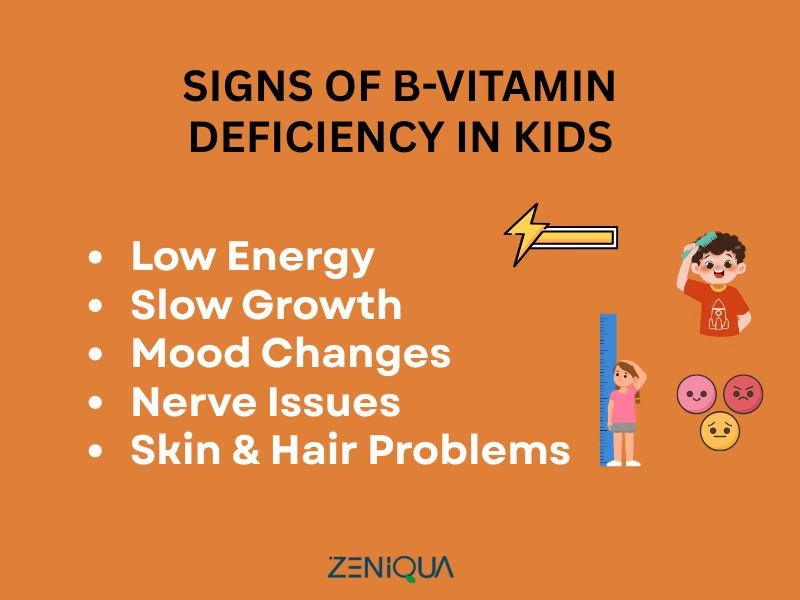
Infographic on symptoms of B vitamin deficiency in kids
Common warning signs of low B vitamins in growing kids

The role of B vitamins in preventing health problems, as demonstrated by the following symptoms:

  • Fatigue or low energy levels – reduced efficiency in converting food into energy.
  • Poor appetite or slow growth – B vitamins are essential for metabolism and tissue development.
  • Mood changes or irritability – B6, B9, and B12 support neurotransmitter production.
  • Neurological issues –  like tingling or coordination problems, which can be linked to B6 or B12 deficiencies.
  • Skin, hair, or nail problems – often linked to insufficient B2, B3, or B7 (biotin).

Preventive diagnosis enables dietary adjustments or supplementation with pediatric advice.

Supplementation and Safety

Although a balanced diet is the most optimal source of B vitamins, certain children might need supplements because of picky eating, restrictive diets, or absorption problems.

The role of B vitamins in supplementation can be summarized as follows:

  • When supplementation is helpful – for vegetarian or vegan children, picky eaters, or kids with certain medical conditions.
  • Recommended dosages – always follow pediatric guidance; water-soluble vitamins are generally safe, but excess can still cause side effects.
  • Forms of supplements – chewable tablets, liquid drops, or fortified foods.
  • Precautions – avoid mega-doses unless prescribed, monitor for any adverse reactions.

One such supplement is Zeniqua Bright Bites 30 Gummies, a daily gummy that combines 12 essential vitamins and minerals with a gut-friendly probiotic (Bacillus coagulans) to support your child’s immunity, growth, brain development, and digestion, all in just one tasty chew. Zeniqua Bright Bites is gelatin-free, non-GMO, and free from artificial additives, making it a parent-friendly choice for daily nutrition.

If you’re unsure how much vitamin B is required daily, pediatric guidance is recommended, as needs vary by age.

Conclusion

B vitamins are very crucial in promoting the growth of children, their energy, and the development of the brain. These nutrients play an essential role in daily life and health in the long term, whether it is the transformation of food into fuel or aiding cognitive processes and metabolism. The benefits of B vitamins make them indispensable in a child’s nutrition.

The role of B vitamins becomes even more significant when children have specific nutritional needs or limited food variety. Supplements like Zeniqua Bright Bites can be used to make sure that your child is getting all the necessary vitamins to provide energy, focus, and growth.

Parents can help their children to be energetic, focused, grow, and feel well by supplementing them with B-vitamin-rich food, paying attention to the signs of deficiency, and understanding the effects of deficiency on their children.\

FAQs

1. Do B vitamins provide energy?

Yes, B vitamins are energy-giving because they assist the body in breaking down carbohydrates, fats, and proteins into energy. They do not behave like stimulants, but they enhance the daily energy levels.

2. Is Bright Bites effective in enhancing cognitive ability?

Yes. The B vitamins, folic acid, and biotin aid in brain development, memory, focus, and neural activity, which facilitates learning and mental sharpness.

3. When should I consider supplements for my child?

Supplements can be used when one is a picky eater, on a limiting diet, or has problems with absorption. Such products as Bright Bites 30 Gummies can be used to satisfy daily needs safely under pediatric supervision.

4. How can I tell if my child has a B-vitamin deficiency?

Symptoms can be fatigue, irritability, poor appetite, slow growth, lack of concentration, or skin/hair problems. Seek the advice of a pediatrician in case of these symptoms.

5. What is the daily requirement of B-vitamin?

The answer to “How much vitamin B is required daily?” depends on age and the B vitamin. Small amounts taken daily are usually required by children. A pediatrician is able to give specific age-based requirements.

    author avatar
    Manasa Krishna
    Perumalla Manasa Krishna is a trained pharmacist with expertise in creating clear and reliable medical content. She uses her pharmacy background to simplify complex medical concepts, helping readers understand the benefits of supplements and wellness products with ease. She is passionate about making health information accessible and trustworthy, ensuring every piece of content reflects scientific accuracy and care. Her writing combines professional knowledge with a reader-friendly style, supporting the brand’s mission to promote well-being through credible and practical guidance.
    author-avatar

    About Manasa Krishna

    Perumalla Manasa Krishna is a trained pharmacist with expertise in creating clear and reliable medical content. She uses her pharmacy background to simplify complex medical concepts, helping readers understand the benefits of supplements and wellness products with ease. She is passionate about making health information accessible and trustworthy, ensuring every piece of content reflects scientific accuracy and care. Her writing combines professional knowledge with a reader-friendly style, supporting the brand’s mission to promote well-being through credible and practical guidance.

    Leave a Reply

    Your email address will not be published. Required fields are marked *